Solving the 'who's actually here?' problem. How booking redesign reduced admin burden across over thousand spaces
Overview
About
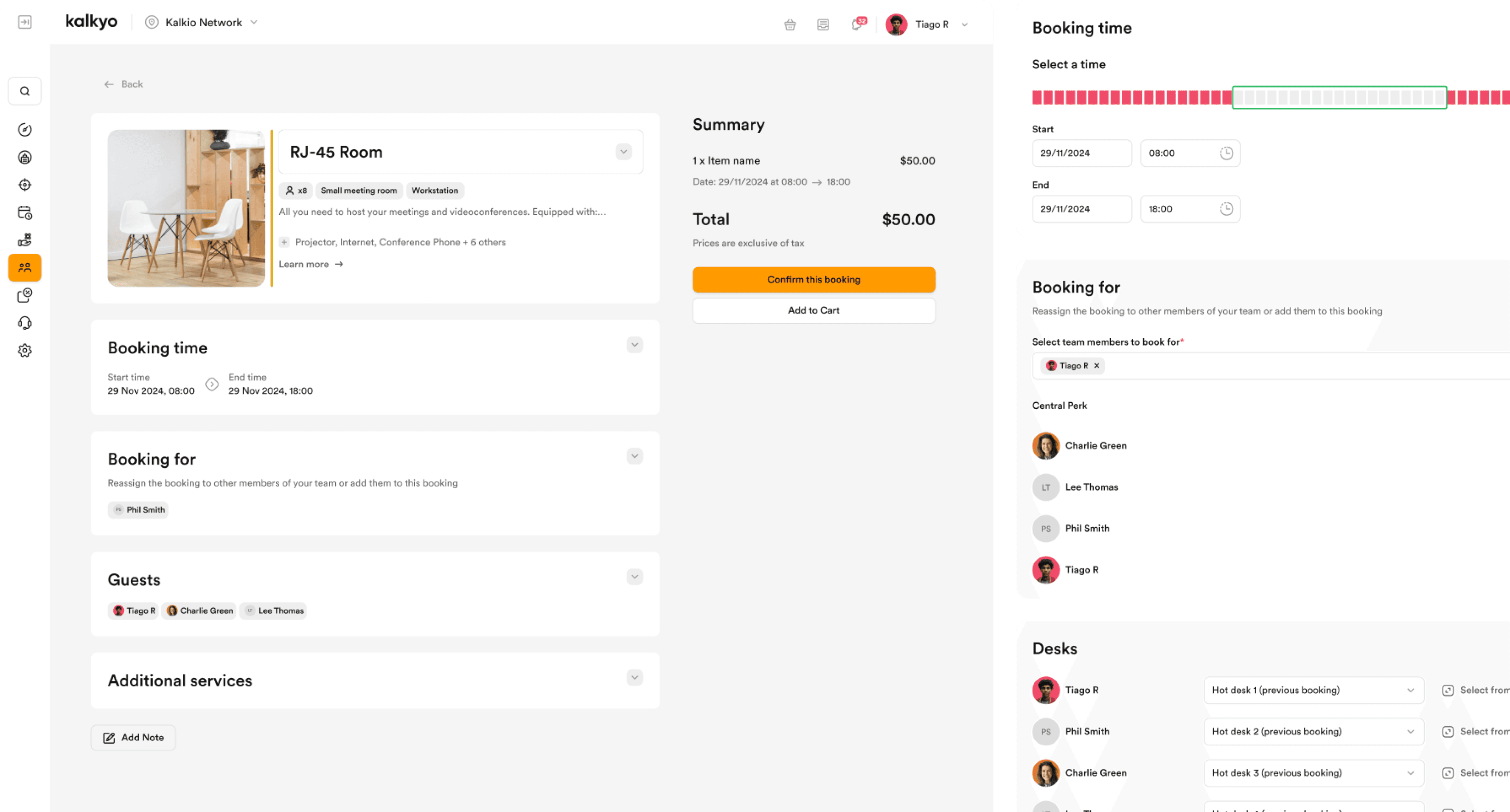
This project redesigned the booking experience across our web portal and mobile app for over thousand coworking and event spaces. The goal was to enable office managers and PAs to efficiently book spaces for their team members while giving operators accurate visibility into who would actually be using those spaces.
The challenge
Identity confusion: when office managers booked spaces for executives, everything appeared under the office manager's profile. Operators had no idea who would actually use the space on the day.
Cognitive overload: the booking interface was cluttered with options, overwhelming users with everything at once.
Impact
The redesign achieved 62.4% adoption in the first month, which was significant for a white-label product where many customers run customised versions.
Enterprise admins got the efficiency they needed, operators got accurate occupancy data. This also created a scalable foundation for future features.
Customers found it more user-friendly, modern, and reminiscent of familiar e-commerce experiences.
Time frame
Role
Responsibilities
TL;DR
Before redesign
Office managers booking for others created identity confusion
Operators couldn't see who would actually use spaces
Repetitive manual workflows for multiple bookings
Cluttered interface with cognitive overload
After redesign
Easy to see who made the booking and who the booking is for
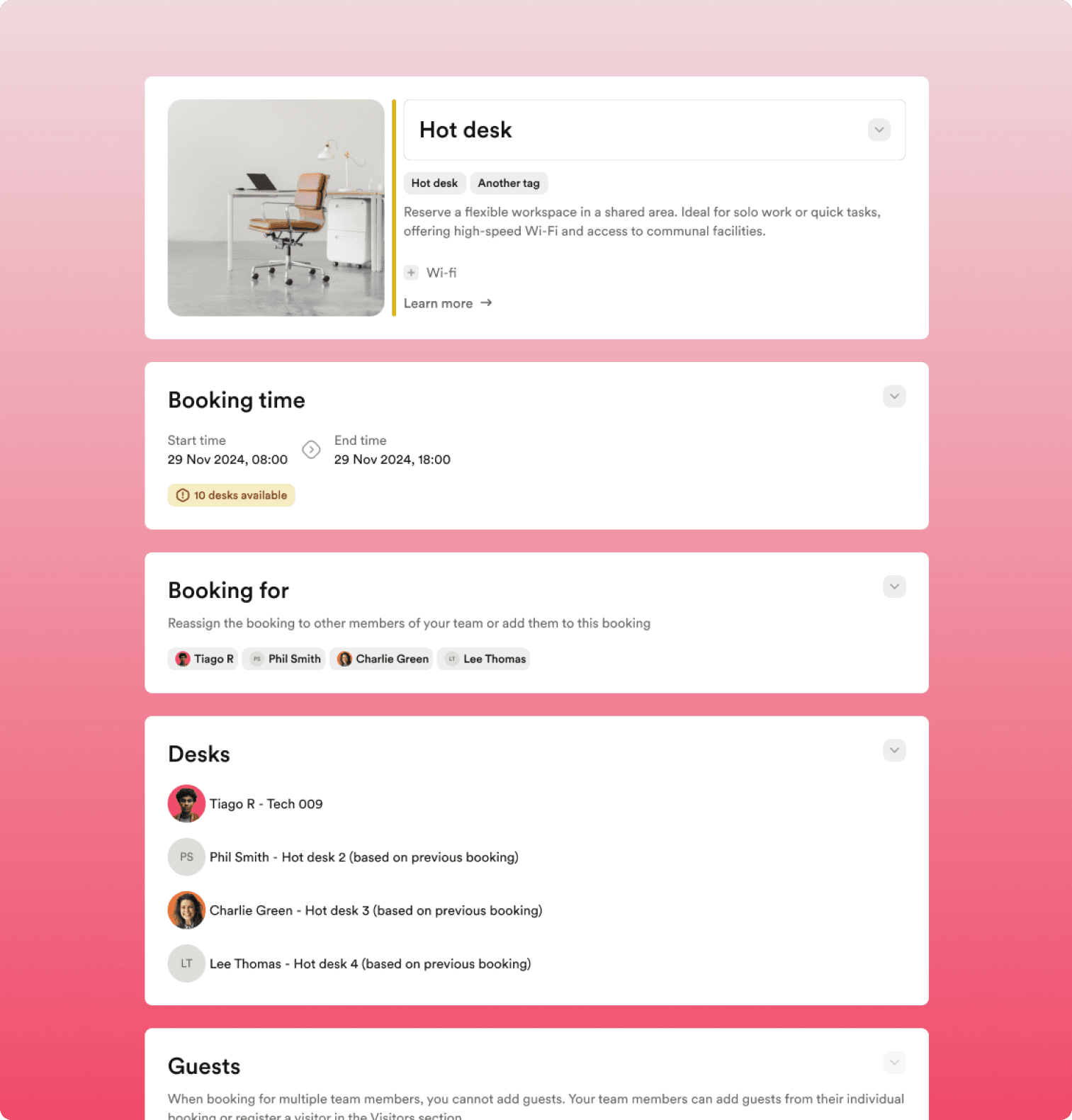
Option to make a booking for multiple team members at once
Simplified, modern booking experience
Scalable foundation for future features
Achieved
62.4% adoption in month one
Improved operational efficiency for team admins
Accurate occupancy data for operators
Positive feedback on usability and modern design
The Redesign
Team booking functionality
Bookings now correctly attribute to the actual space user, not the person making the booking. Office managers and PAs can select who the booking is for, giving operators accurate occupancy data.
Batch booking capabilities
Book the same resource multiple times in a single workflow. That office manager booking desks for team members coming into the office on Tuesday? They're done in 30 seconds instead of fighting through five separate flows.
Simplified information architecture
Restructured how booking options are presented, reducing cognitive load from showing everything at once in modal dialogs. The experience now feels more guided and less overwhelming.
Scalable foundation
The redesigned architecture makes it easier to add future features without creating technical debt or further cluttering the interface.
Strategic Decisions
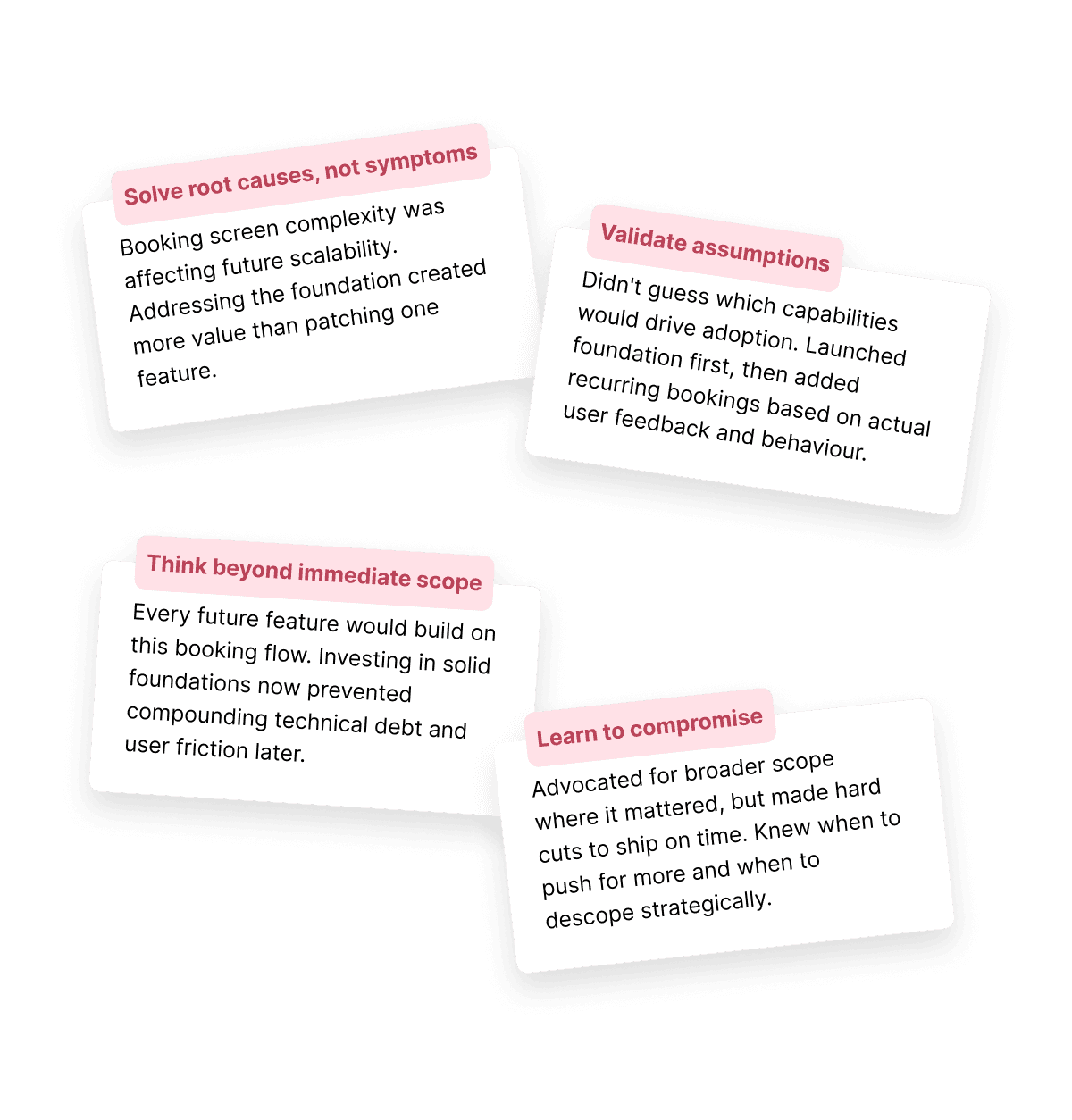
The MVP redefinition moment
Initial scope: add "book for someone else" feature
My recommendation: redesign the booking experience
I chose to advocate for broader scope based on what I was seeing in user workflows. Adding a feature to an already problematic interface would have compounded issues. Sometimes the best solution isn't the fastest one.
The ROI wasn't just booking on behalf, it was fixing the foundation for everything we'd build next.
Strategic compromises
You can't do everything at once. I left out nice-to-haves like automatic desk assignment to focus on getting the foundation right. That focus helped us launch successfully and get strong adoption.
Post-launch iteration
Added recurring bookings functionality after initial launch based on user feedback. Because we got the architecture right initially, adding features didn't require major restructuring.
Booking experience
Results
62.4% adoption within one month proved the redesign worked even in heavily customized environments.
More intuitive experience based on customer feedback calling it "ecommerce-like."
Reduced support burden from operators who previously struggled with the cluttered interface.
Accurate occupancy data for space operators who can now see who actually uses the space, not just who made the booking.
Learnings
Systems thinking over feature building
The real opportunity came from recognizing that "booking on behalf" was a symptom, not the actual problem. The interface had become cluttered over time. I chose to redesign the system rather than bolt on another feature. It took longer, but we avoided technical debt and built something we could actually grow with.
Advocacy is part of the design work
Articulating the business value of design investments, particularly when advocating for broader scope than initially requested, became as important as the design work itself.
Making time for improvements is important
I kept certain elements like date/time fields as they were to contain the initial scope and get the foundation right. But I made sure we had a plan for post-launch improvements. When we added recurring bookings later, it went smoothly because we'd built a solid foundation first. Building time for iteration into the project from the start matters just as much as the initial launch.
Want to work together? Drop me a message and let's chat.
© 2025 Liva Designs