Senior Product Designerwho starts with the why, then designs and ships the how
Selected Work
Coworking Members Portal +57% Conversion, −43% Support Tickets
Sep 2025 – May 2026
RoleSenior Product Designer
PlatformWeb
StatusPost-launch explorations
I owned product and design on a full rebuild of a platform used by members of 3,000+ coworking spaces, replacing a portal members avoided with one they actually chose to use. Still shipping improvements directly in the codebase today.
Coworking Members Portal | +57% Conversion, −43% Support Tickets
+57%booking conversion 30% → 47%
45%editor adoption target was 15–25%
−43%support tickets 6% → 3.4%
Nexudus is workspace-management software for coworking and flexible-space operators, covering bookings, billing and community tools for 3,000+ spaces worldwide.
The Challenge
Members Portal is core to the space management platform offering, but operators weren't seeing the conversions and engagement they wanted. Members would pop by reception to book a meeting room they could already book themselves online, and it was the last place anyone wanted to spend time.
30%successful booking checkouts, which was the main revenue driver for most operators.
"Members see this as the boring place where they can only go and look at invoices. Nobody likes looking at invoices."
Operator, beta customer
Additionally, the option to access and customise most of the front-end code meant operators were often stuck on outdated portal versions, struggling to keep up because of the customisations already in their portal.
previous version: booking experienceBefore
01Select a room
02Edit preferences, add-ons
03Add to basketMandatory, no way to skip it
04Click to check out
05Create an accountForced sign-up mid-checkout
06Success-like screenReads as done, nothing is paid
07Dropped into invoice page for paymentPayment sits after the success screen
▼ Drop-off and confusion
7steps to pay4friction points30%completion
new version: booking experienceAfter
01Select a room
02Edit preferences, add-ons
03PayNo account required
04SuccessPrompt to create an account, optional
● Booked and paid
4steps to pay0forced sign-ups47%completion
Basket, forced account creation and the separate invoice page removed; payment now happens before the success screen.
Team & How It Started
Most projects at Nexudus started with discovery and design. This one didn't: engineering had already built a working prototype to fix the architecture first. Reviewing someone else's built work isn't always comfortable, but it forced faster customer contact and iteration on something real.
There was no dedicated product manager, so I covered both end to end: discovery research, product strategy, scope, the KPI framework, migration planning, the designs themselves, running focus sessions, QA, and post-launch iteration. From first review in September 2025 through launch in May 2026, and still shipping improvements.
The rest of the team:
Project manager, cross-functional timeline coordination (not a product role)
1 engineer & 2 QAs
Visual designer, assisted with design system asset creation
Strategic Thinking
Built the process the deadline demanded.With a fixed, aggressive launch date, it mattered to get feedback as early as possible and align internal teams and stakeholders on what we were shipping. I introduced internal and external focus sessions and formal UAT days, running ~15 sessions across three time zones. Neither existed at Nexudus before this; both are now used company-wide, and the framework has become the blueprint for other big projects, proof it scales beyond v5.
Designed for a product that didn't exist yet.I designed the portal mobile-first, which meant the Members app had a solid foundation to launch on four months later, on the same codebase.
Owned the measurement problem.I implemented a more thorough KPI framework, backed by ~100 hours of direct customer research, and got stakeholder buy-in. It's still what the team tracks against today.
Task completion: plan purchaseNo baseline data existed15%Off track
Grey band = target range I set · Dot = actual · Tick = baselineThree of the seven categories had no usable baseline from the previous version, so I set those targets from industry averages and treated month 1 as the reference point. Month 6 and month 12 checkpoints are already scoped. The framework is still what the team tracks against today.
What Shipped
Booking flow: coded prototype, browse to checkout to confirmed.
Note: the payment step shown here is illustrative; the real experience varies depending on the third-party payment integration in use.
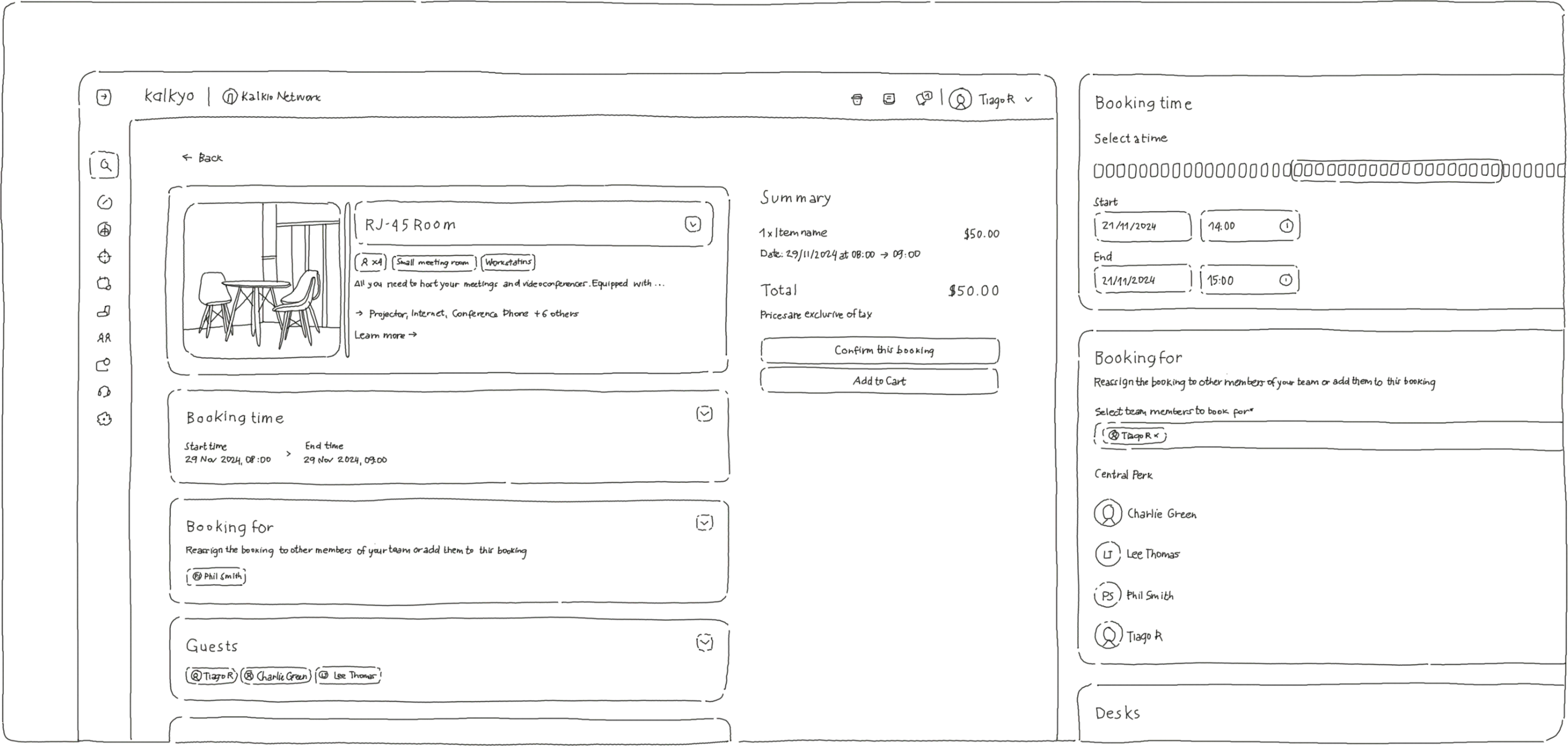
Design artifacts
Coded prototype: customising the portal through the drag-and-drop editor.
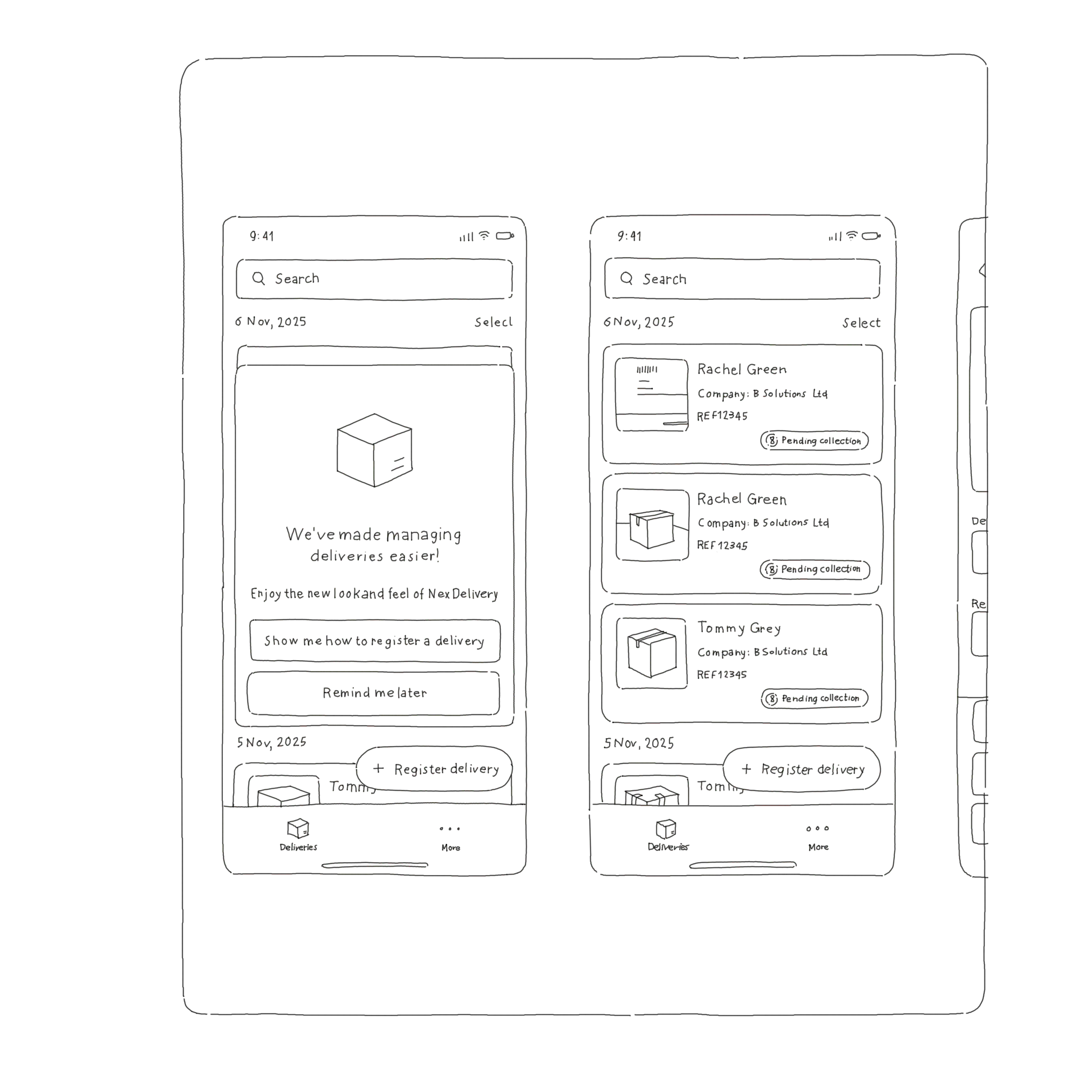
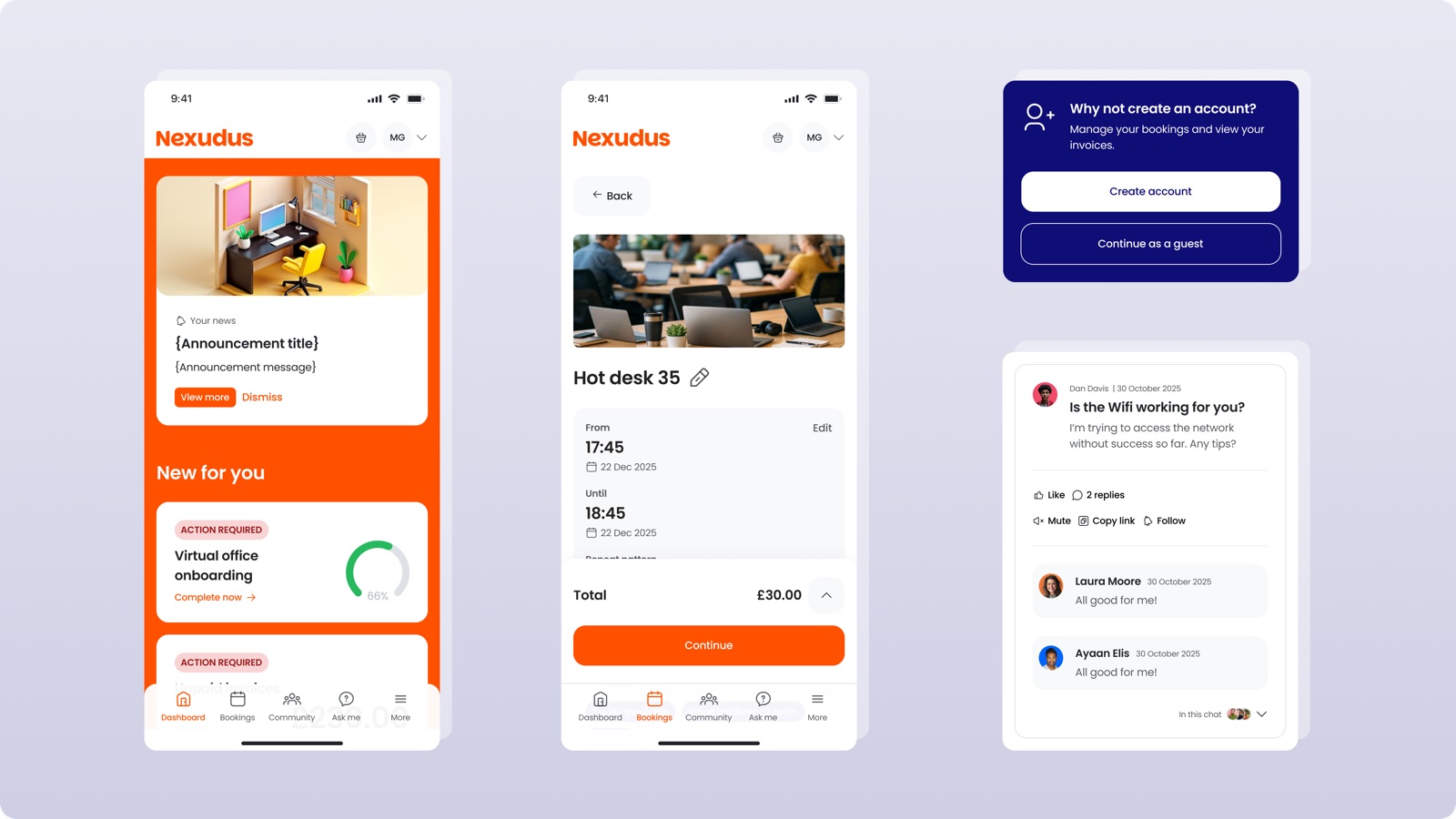
Mobile app foundations
Guest checkoutBook or buy without creating an account, removing a friction point that was costing conversion and revenue.
Instant & suggested bookingsOne click when no upfront payment is required, plus frequent rooms surfaced from booking patterns, so members book and rebook faster instead of searching each time.
AI support chatBooks and manages bookings, answers questions about memberships, and handles support queries directly in chat, cutting operational load so the space team isn't answering the same questions over and over.
Redesigned dashboardNudges members toward what actually needs their attention, rather than expecting them to go explore what's available.
Embedded booking widgetLets operators embed portal flows, room bookings, event tickets, membership purchase and more, directly into their own site, so checkout happens there without sending customers elsewhere.
Drag-and-drop editorBrand customisation without the upgrade risk that used to lock operators out of new features.
What Customers Say
"The checkout experience is significantly faster. Predictive bookings and the AI assistant add a huge amount of value to our members."
General Manager, beta customer
"The new Portal feels much more aligned with how our coworking space actually operates, which we really appreciate."
Community Manager, beta customer
"I love that you can ask it to find a room for 15 people on a day and time."
Head of Corporate Workplace, beta customer
Impact · 3 months post-launch
Booking completion moved from 30% (v4 baseline) to 47% at month 3, against a target of 35 to 38%. That's a 57% relative lift in the flow that drives most operators' revenue.
30% → 47%Booking completion (57% relative lift)
41% → 71%Instant bookings completion
6% → 3.4%Support ticket volume (Month 3)
45.3%Editor adoption (target was 15–25%)
33% → 40%Guest checkout completion
74 → 96Accessibility score
Learnings
AI changed what my role needed to be.The first project where I felt AI-assisted workflows change how fast we could build. As execution got easier, my role shifted toward shaping and architecting: getting feedback early and iterating, rather than settling on the first solution.
KPIs showed the whole picture, not just this project's.Building the KPI framework showed how much we'd been missing on past projects without one. Beyond defining this project's success, it now surfaces the impact of small post-launch improvements, and of the product team overall.
Process outlives any one feature.The focus-session and UAT formats introduced here are now used company-wide, longer-lived than most of what shipped in v5 itself. This project became the blueprint for how we plan and run big projects.
Learning to delegate.Being the only product person meant staying hands-on everywhere: training the company, helping customers, on top of the day job. Enough late nights taught me I need to set boundaries for this to scale. Delegating well is a skill I'm still building.
Still shipping, not handed off.Also my first project using AI-assisted coded workflows. Since launch, I've kept shipping front-end fixes straight from customer feedback, reviewed by engineering, plus monthly check-ins with Customer Success and Support to catch issues early, stay on top of the KPIs, and focus on whatever will move them most.
What's Next
I've been shipping front-end fixes directly in code, along with improvements like clearer membership benefit visibility on the dashboard and an overview of the conversations happening in a space.
Feedback since launch keeps pointing to the same thing: the next big focus is stronger community engagement, not just faster transactions. I've spent time mapping the competitor landscape to understand how to approach it.
I believe in continuous progress, and we've already made a start: separating direct messages from community discussion boards, after feedback flagged that a mixed inbox felt like a group chat.
One of the first pieces of that engagement work: direct messages between space members, separated from community discussion boards so conversations don't feel like a group chat.
The platform redesign also laid the foundation for a Members mobile app, built on the same shared codebase. More on that soon.